Winter Training for Spring Climbing (Part 1): Build Your Foundation Now
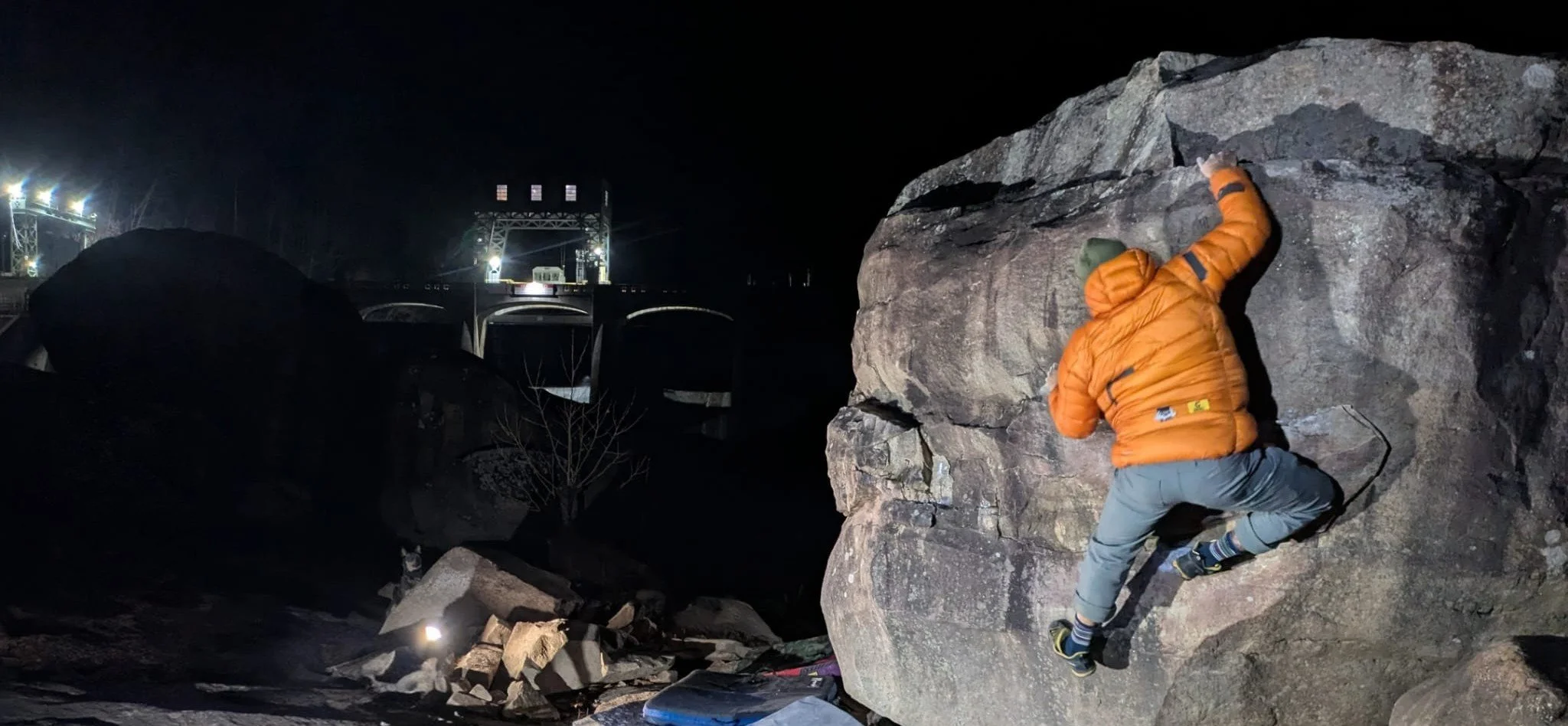
January may still feel like deep winter in the New River Gorge, but for climbers, this is the season of preparation. Spring arrives fast and those first cool, dry days are when many of us hope to climb our best.
The weeks leading up to spring are the perfect time to build strength, reinforce good movement habits, and set realistic goals that carry you into the outdoor season feeling strong, confident, and injury-resistant. Winter doesn’t have to be an “off-season.” It can be your strongest reset of the year.
Build Your Foundation
Winter training is all about smart progression, tendon adaptation, and strengthening the movement patterns that help you climb efficiently.
Instead of jumping straight into intense sessions after holiday downtime, January is the ideal time to set goals and rebuild gradually and intentionally.
What a strong foundation looks like:
Shorter but more frequent sessions
Leaving a little energy in the tank
Prioritizing form and control over maximum effort
This is also a great time to check in with how your body feels; especially fingers, elbows, shoulders, and hips. A slow build now can make the difference between a strong spring and an injury that interrupts your season.
Set Realistic Goals
New Year’s motivation is real, but the best climbing goals are the ones you can stick with. Instead of only focusing on a grade, consider goals that support consistent progress and long-term improvement.
Solid goal ideas for January:
Climb 2–3 times per week consistently for 4–6 weeks
Commit to one technique focus each session (footwork, body positioning, pacing)
Add 10 minutes of mobility or shoulder stability work after each climb
Track how you feel (energy, soreness, confidence) to avoid overtraining
Building sustainable habits now gives you the best chance to arrive at spring prepared, without burning out halfway through February.
Mental Prep: Mindset Matters
Winter training works best when you treat it like a long game. January is about building momentum — not proving anything in one session.
Redefine success for winter training.
Success doesn’t have to mean hitting a grade or sending every session. Example goals:
finishing a workout without tweaking anything
moving with better control
leaving the gym feeling energized instead of wrecked
improving one technique focus over time
A few reminders that make winter training easier (and more effective):
Consistency beats intensity.
Your best sessions aren’t always the hardest. Shorter sessions done regularly build the strongest base.
Success = good reps.
Focus on control, movement quality, and leaving energy in the tank.
Warm-ups take longer in winter.
Your body may take longer to feel “ready.” If you commit to starting slowly, most sessions turn around once you’re moving.
Confidence comes from repetition.
Easy mileage and low-stakes practice now leads to calmer climbing later.
Track small wins.
A quick note after each session — energy, soreness, what felt better, etc. — helps you notice progress and spot patterns before over-training hits.
Winter is a reset, not a test. The goal is to show up, stack reps, and build a foundation that feels steady — so when spring conditions are perfect, you’re ready.
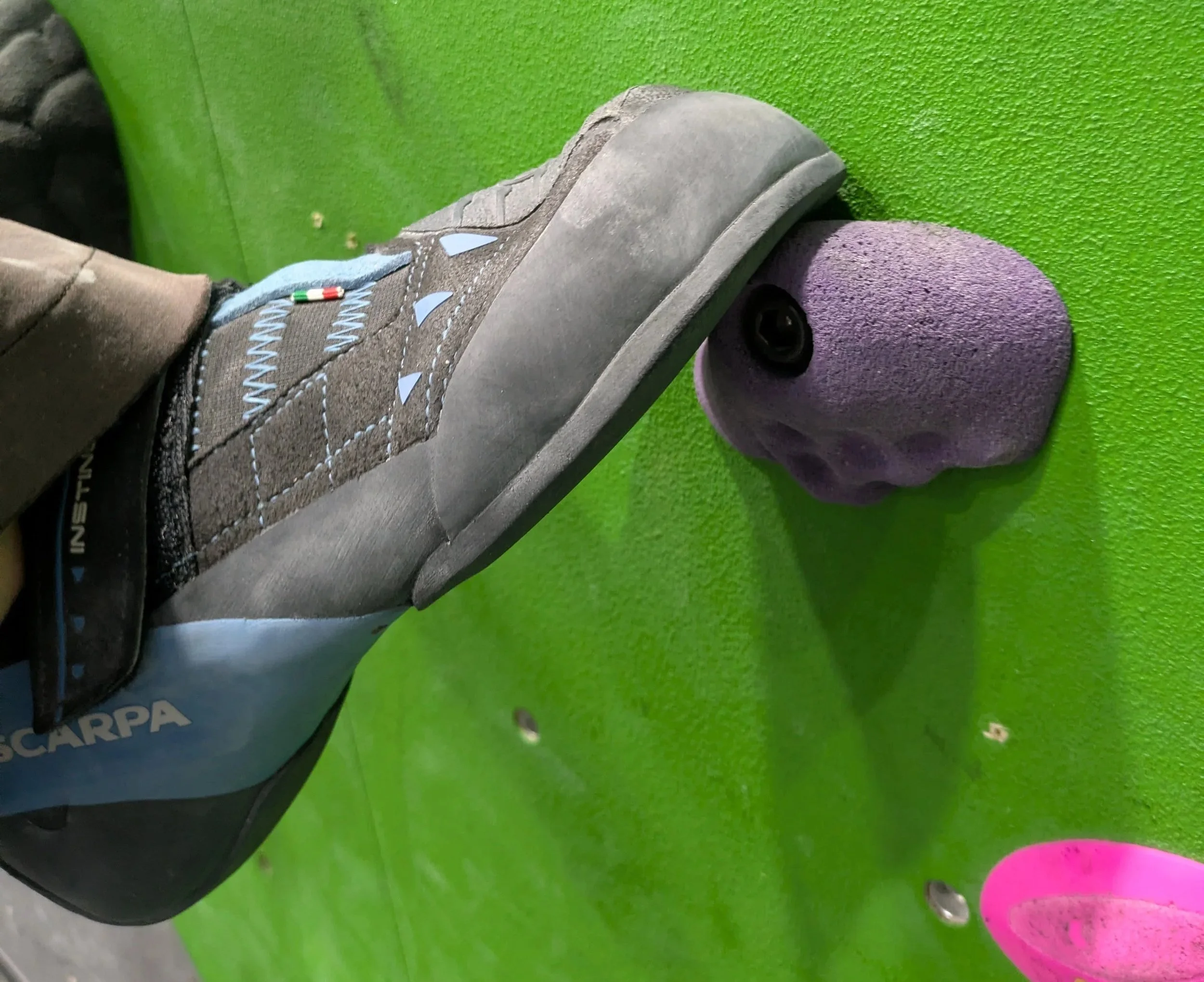
Working on intentional feet placement (instead of flailing or scraping) will help save energy and your rubber soles
Improve Technique At The Gym
Winter gym sessions are the perfect environment to refine technique: practice efficient body positioning, footwork, and movement decisions without the pressure of sending a specific outdoor goal.
Technique drills that pay off outdoors:
Silent feet: place your feet gently and precisely
Also, try to hit the hold directly and not hit the wall first and then scrape down until you reach the hold.
Downclimbing: improve control, strength, and body positioning
Slow is smooth and smooth is fast. Pause before moves to assess body placement and reduce rushed decision-making
Style practice: spend time on slab, overhang, and compression to expose weaknesses
Even small improvements in technique can unlock grade progression just as effectively as building strength.
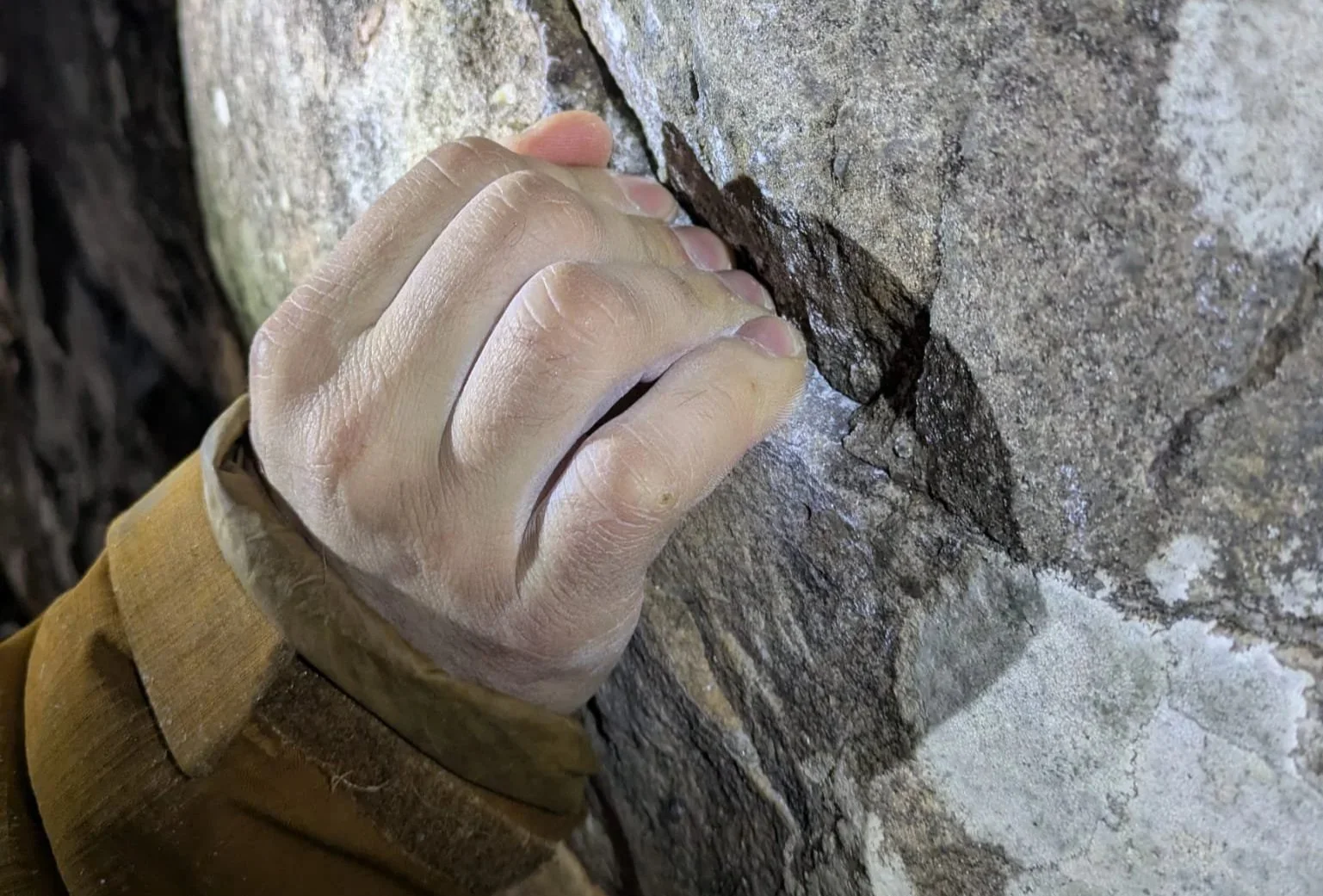
Starting with hang board sessions inside can tremendously help you crimp better outside
Looking Ahead to Spring
Whether you’re eyeing a specific project this spring or simply want to feel fitter and more capable on rock, the work you put in now will pay off when the days get longer.
Over the next months, we’ll step it up and introduce additional winter training topics in more detail, including:
finger strength training
power endurance for pumpy routes
injury prevention, mobility, and
mental strategies for confidence and focus
Looking for some winter climbing areas?
Here are some of our favorite: